Free Consultation
(801) 255-5555


Close
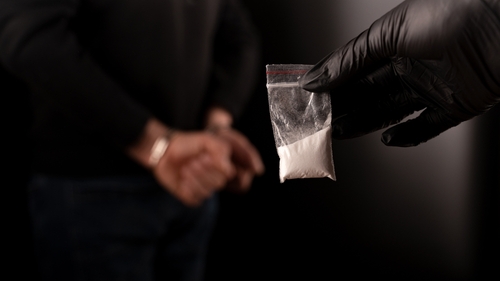
Utah drug laws look different in 2026 than they did just a year ago. Effective May 6, 2026, the Legislature moved most criminal drug offenses out of Title 58, which governs occupations and professions, and into a new Chapter 18 of the Utah Criminal Code in Title 76.
If you’re facing a drug charge, older articles and court records may refer to a different statute than the one on your paperwork. The date of the alleged offense and the statutory citation help identify which version of Utah law applies.
At Ayres Law Firm, we help people across Draper and the Wasatch Front understand their charges, potential consequences, and available options. We explain what the State must prove and help you prepare for each stage of the case. Contact Ayres Law Firm at (801) 255-5555 to discuss your situation.
Title 76, Chapter 18 groups Utah’s criminal drug offenses into several parts:
Many key definitions, including the drug schedules themselves, remain in Title 58, Chapter 37, and the new criminal sections expressly incorporate them.
Before the 2026 recodification, many core controlled substance offenses, including possession, distribution, and manufacturing, were addressed in former Utah Code § 58-37-8. Those citations still appear in older court records, plea agreements, and online articles.
For offenses on or after May 6, 2026, possession is now charged under Utah Code § 76-18-207, while distribution, manufacturing, and possession with intent to distribute have their own separate sections. The new statutes also state that prior convictions under earlier, substantially similar laws can still count for penalty enhancements.
Utah organizes controlled substances into schedules, and the schedule often determines how serious a charge will be.
The schedules are found in Utah Code § 58-37-108:
Utah also maintains a separate list of “listed controlled substances” in § 58-37-109.
A prescription medication can still lead to a charge if it’s possessed without a valid prescription or obtained through fraud. Marijuana is treated separately from other Schedule I substances in Utah’s possession and distribution penalties.
Possession under Utah’s medical cannabis program is governed by separate rules in Title 58. Utah law also regulates controlled substance analogs. The possession and distribution-related statutes generally place analogs in the same base penalty categories as Schedule I and II substances other than marijuana.
Under § 76-18-207, a person commits unlawful possession or use if they knowingly and intentionally possess or use a controlled substance or analog. It isn’t a crime if the substance was obtained under a valid prescription, directly from a practitioner acting in their professional practice, or as otherwise authorized by law. The State must prove the person knew about the substance, which is often disputed when drugs are found in a shared car or home.
The grade of a possession charge depends on the substance and the person’s history:
Utah law provides an affirmative defense to certain possession or use charges arising from an overdose event when specific requirements are met. The defense covers less than 16 ounces of marijuana or a scheduled or listed controlled substance other than marijuana. It may protect the person seeking medical assistance or the person who is the subject of the report, depending on the circumstances. Requirements include providing location information, remaining as required, and cooperating with responders.
Unsure how your prior record affects the charge? Call Ayres Law Firm at (801) 255-5555 to discuss which penalties may apply.
Drug paraphernalia offenses now appear in Part 3 of Title 76, Chapter 18. Using or possessing paraphernalia with intent to use it with a controlled substance is generally a class B misdemeanor.
Delivering or selling paraphernalia, knowing it will be used with drugs, is generally a class A misdemeanor, and an adult who delivers paraphernalia to a minor at least three years younger faces a more serious charge. Unused hypodermic syringes in a sealed, sterile package are not treated as paraphernalia.
Paraphernalia includes equipment or products used, or intended for use, to grow, manufacture, package, store, or consume a controlled substance. Common examples include pipes, bongs, scales, grinders, small baggies, and rolling papers. Many of these items are legal to own, so the State generally must show they were used or intended for use with drugs. Context matters, including residue, where the item was found, and other evidence.
Distribution-related offenses generally carry higher base penalties than simple possession.
Under § 76-18-210, possessing a controlled substance with intent to distribute is generally a second degree felony for Schedule I or II substances (other than marijuana), analogs, and GHB. It’s a third degree felony for Schedule III or IV substances, marijuana, and listed substances, and a class A misdemeanor for Schedule V substances. Prosecutors often try to prove intent through quantity, packaging, scales, cash, or messages.
Distributing or agreeing to distribute a controlled substance under § 76-18-209, and producing or manufacturing one under § 76-18-208, follow the same grading structure. A qualifying repeat conviction can increase the offense classification.
An offense otherwise classified as:
Fentanyl trafficking under § 76-18-220 is a first degree felony with significant restrictions on probation. The statute’s 100-gram threshold applies to the weight of a mixture or composition, including pills, containing any amount of fentanyl or a fentanyl-related substance, not just the weight of the fentanyl itself.
Several factors can raise the grade of a charge or add sentencing consequences, but they don’t apply the same way to every offense.
Beyond the repeat possession rules discussed above, a qualifying prior conviction for distribution, manufacturing, or possession with intent to distribute can increase a later possession penalty by one degree. This enhancement cannot raise a possession offense above a second-degree felony.
Under these drug-offense provisions, qualifying guilty or no-contest pleas, including pleas held in abeyance, can count as convictions for enhancement purposes, even if the charge is later reduced or dismissed.
Section 76-18-204 provides enhanced penalties for specified offenses, including distribution, manufacturing, and possession with intent to distribute, but not simple possession. Covered circumstances include conduct at or within 100 feet of:
Timing or operating-hour requirements apply to several location categories.
Enhancements can also apply when a covered offense occurs in the presence of someone under 18 or involves arranging delivery to an inmate or correctional-facility grounds. The applicable enhancement depends on the offense and circumstances; mistakes about a person’s age or the protected location generally are not a defense.
If your charge includes an enhancement, Ayres Law Firm can explain what it means and whether the allegations support it. Call (801) 255-5555 to discuss your case.
The consequences depend on the offense level, your history, and how the case is resolved.
Under Utah’s general sentencing ranges, a class B misdemeanor carries up to six months in jail, a class A misdemeanor up to 364 days, and felonies carry indeterminate prison terms ranging from up to five years for a third degree felony to five years to life for a first degree felony.
Potential financial penalties include fines and applicable surcharges. When probation is available, its conditions may include drug testing, treatment, and other requirements.
A drug conviction can affect employment, housing, professional licensing, immigration status, and firearm rights. Utah’s courts also report drug convictions to the Division of Professional Licensing. Some of these consequences last long after a sentence ends, which makes the way a case is resolved especially important.
Depending on eligibility and the circumstances of the case, potential resolutions may include a drug court program, a plea in abeyance, or a negotiated reduction in charges. Treatment, assessments, and education may also be part of a case resolution, including in juvenile cases.
A criminal defense attorney reviews how the evidence was obtained, whether the substance was properly identified, and whether the State can prove knowing and intentional possession. That review also includes whether the correct version of the law applies and whether the evidence supports any alleged enhancements.
Based on that review, an attorney can identify potential challenges to the prosecution’s case and evaluate available options for resolving the charge.
A drug charge can leave you unsure what to expect or where to begin. Ayres Law Firm helps clients in Draper and across the Wasatch Front understand the allegations, evaluate their options, and prepare for what comes next. You can expect straightforward explanations and honest guidance, not promises about an outcome.
Learn more about our approach to drug crimes defense, or contact Ayres Law Firm at (801) 255-5555 to discuss your charge.
